
East of Tanzania's safari plains, the Eastern Arc Mountains rise above towns, farms and valleys. Their forests support rare plants and animals. Visitors come for birding, waterfalls, walks and the relationship between upland water and communities below, rather than high-altitude summits.
Why the forests matter
The Eastern Arc is a series of ancient mountain blocks stretching across eastern Tanzania and into south-eastern Kenya. Moist air from the Indian Ocean helps support forest on parts of their slopes. Over long periods, separation between forest blocks has allowed plants and animals to develop in distinctive ways.
Scientists use the term endemic for a species naturally confined to a particular area. In the Eastern Arc, that area may be a single mountain or forest. Some wildlife is easier to hear than to see, and a skilled naturalist can transform a quiet walk by explaining birdsong, insects, vegetation and the ecology behind them.
These forests also supply water to farms, towns and cities. Their conservation is closely tied to agriculture, livelihoods and land use.
The Eastern Arc Mountains Forests of Tanzania appear on UNESCO's World Heritage Tentative List. That means Tanzania has identified them for possible nomination; the wider mountain system is not an inscribed World Heritage site.
Uluguru Mountains
The Uluguru Mountains rise sharply above Morogoro. Their steep slopes and cloud-influenced forests form a landscape where walking, natural history and cultural encounters can sit close together.
Species such as the Uluguru bush-shrike, alongside distinctive amphibians, insects and plants, interest naturalists. Finding them may take patience and specialist guidance. Streams, vegetation and changing views also reward a visit.
The lower slopes are lived-in places. Paths connect settlements and farmland; some longer routes climb towards forest and high viewpoints. Local interpretation can give meaning to the relationship between land, water and the mountain.
Walking in the Ulugurus
A forest or village walk may be easier than a mountain ascent. The Bunduki Gap, areas around Mvuha and other highland localities feature in hiking and historical accounts. Confirm the starting point, suitable guide and land-access arrangements for each.
There are also stories connected with colonial-era structures, older leadership and refuge in the mountains. They may make compelling subjects when supported by local historical interpretation; a place-name or story alone is not a verified public attraction.
Morogoro's place in older inland trading networks provides another connection between the mountains and Tanzania's wider history.
Explore the coast–interior caravan history.
Usambara Mountains
The Usambara Mountains are associated with a rich mixture of forest, farmland, mountain settlements and coastal connections. Their western and eastern parts differ, so it is more useful to identify a particular area than simply ask to 'visit the Usambaras'.
The East Usambaras are especially important for biological diversity. African violets have long been associated with Usambara forests, although the familiar houseplant does not tell the whole story of the wild species and habitats.
Amani Nature Forest Reserve
Amani, in the East Usambaras, combines forest exploration with a history of botanical research, cultivation and conservation. Visitors interested in plants and birds may find its forest walks more rewarding than a conventional lookout stop.
The area also has a history of botanical gardens, agricultural estates and transport infrastructure. These human traces make the forest a place to learn about changing uses of the landscape, rather than to imagine it has never been inhabited or managed.
Tanzania Forest Services describes nature walks, birdwatching and other visitor activities at Amani. They are subject to the reserve's own arrangements; the TANAPA national-park fee system is not automatically the applicable one.
Forest connections and everyday life
The forests supply water to farms and settlements. Where offered, local guides and conservation educators can explain how that service shapes land use and livelihoods.
Udzungwa Mountains
The Udzungwa Mountains offer one of Tanzania's clearest alternatives to a vehicle-based wildlife safari. Parts of the mountain system are protected within Udzungwa Mountains National Park, where walking, forest habitats and waterfalls are central to the visitor experience.
The forest is associated with notable primates, birds and other wildlife, including species with restricted ranges. Observing them is different from spotting a large mammal on an open plain: the canopy can conceal animals, sounds travel through vegetation and a guide's knowledge becomes particularly valuable.
Sanje Falls and forest walking
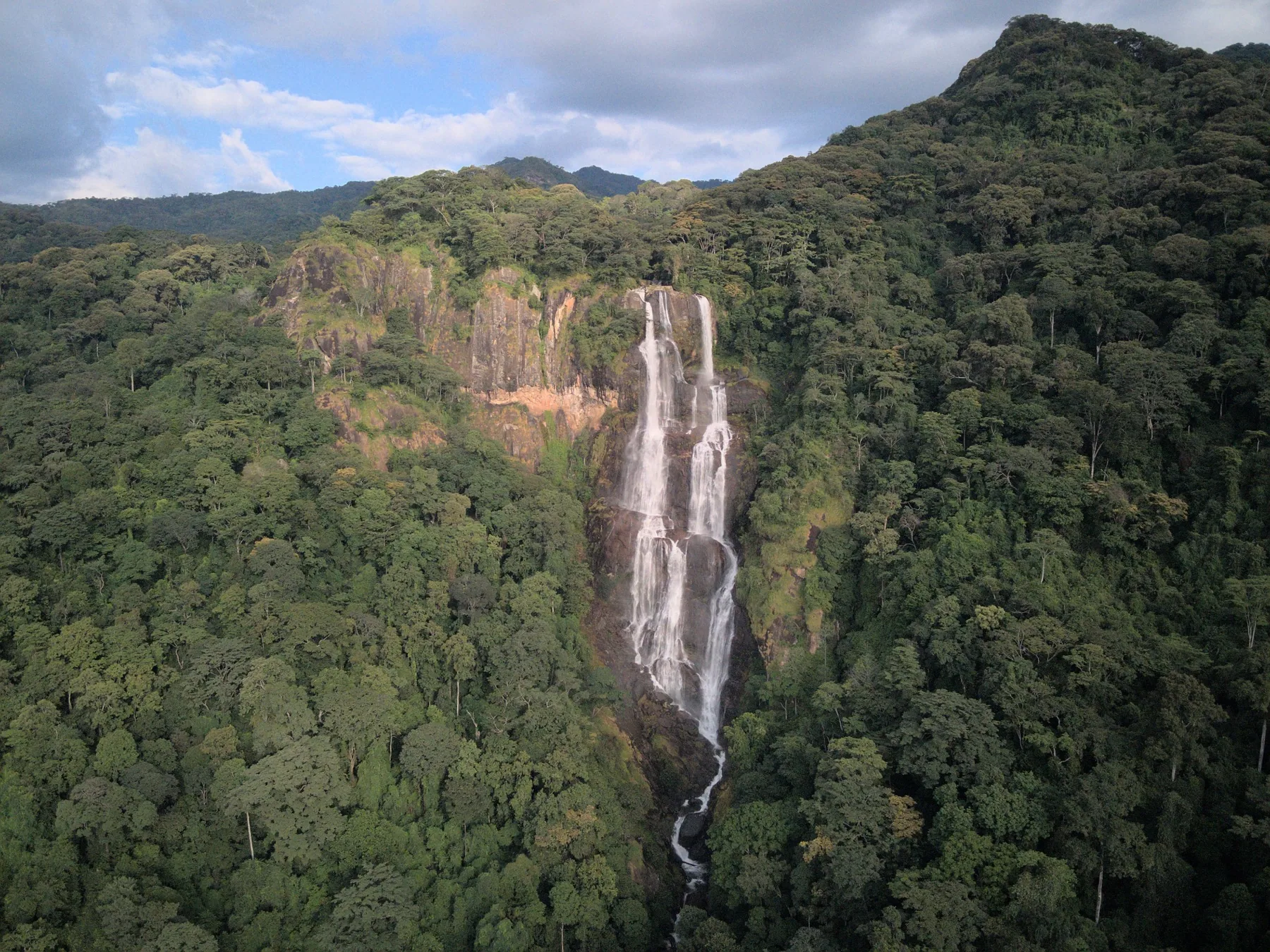
Sanje Falls is a recognisable Udzungwa landmark. Reaching a waterfall on foot offers more than a view from the endpoint: differences in forest height, moisture, birdlife and terrain can be part of the walk.
More demanding mountain objectives include Mwanihana and Luhombero. These should be considered separately from a short waterfall walk because the terrain, duration and practical requirements differ. Some forests discussed in wildlife research lie outside public national-park trails.
Udzungwa is a strong choice for visitors who enjoy walking and noticing small ecological details, not only people who want to summit a peak.
Compare the mountain regions
| Interest | Area to investigate | Distinctive experience |
|---|---|---|
| Mountain walking near a substantial town | Uluguru, around Morogoro | Forested slopes, views, local communities and water catchments |
| Plants, birds and botanical history | East Usambara, especially Amani | Species-rich forest and the history of botanical study |
| A national-park forest hike | Udzungwa | Walking trails, primates, highland forest and waterfalls |
| Specialist natural history | Any of the three, with an appropriate guide | Endemic species and ecological interpretation |
| Culture and landscape together | Uluguru and Usambara foothills | Farming, settlement and the connection between forests and livelihoods |
Choose a mountain area and activity before checking its access rules and fees.
When to explore the forests
Rain keeps these landscapes green, but it can also make trails muddy or slippery. A comparatively dry period may be more comfortable for long walks, while a wetter forest can be rewarding for plants, streams and atmosphere.
Conditions depend on the specific mountain, elevation and trail. For a demanding hike, check recent weather, local guidance and whether the planned route is maintained and open. For birdwatching, ask about the habitat and season relevant to the species of interest.
Explore Tanzania's seasonal differences.
Planning a forest visit
First identify whether the destination is a national park, nature forest reserve or an area accessed through community or other local arrangements. Each can have different admission requirements and guide services.
KAONE's Browse fees is useful for supported official protected-area charges. For Amani and other forest reserves outside that coverage, the responsible authority is the right place to confirm fees and activities. Trip scheduling does not provide routes for every mountain trail.