Lake Victoria links fishing towns and inhabited islands. Lake Tanganyika combines forested shores, freshwater biodiversity and inland-trade history. Farther south, Lake Nyasa meets the Livingstone Mountains and lakeshore settlements. Each offers a different journey from a savannah safari.
Lake Victoria
Mwanza, the Rock City
Built among great granite outcrops on Lake Victoria's southern shore, Mwanza is known as the Rock City. Rocks rise between neighbourhoods and along the waterfront, while fishing, trade and transport keep the lake central to everyday life.
Bismarck Rock, a prominent formation near the water, is one of Mwanza's familiar landmarks. The city's markets, lakeside spaces and working port offer another perspective: this is a major Tanzanian city, not merely a gateway to wildlife parks.
For a cultural encounter, Bujora, outside Mwanza, is associated with the Sukuma Museum. Its collections and interpretation offer an introduction to Sukuma history, music and performance traditions. A museum programme and a living community should not be confused; performances and guided visits depend on what is being offered.
Ukerewe
Ukerewe is the largest island in Lake Victoria and the largest freshwater lake island in Africa. Its main town, Nansio, is the centre of an island with villages, farms, fishing communities, rocky shores and smaller islands nearby.
Ukerewe is no resort islet. Its villages, farms, fisheries, bays and local heritage make exploring the inhabited island the experience, rather than a conventional wildlife safari.
Ferry connections link Ukerewe with the wider lake region. The precise departure point, schedule and onward journey are practical questions to settle before travelling.
Rubondo and Saanane
Rubondo Island National Park protects an island environment associated with forest, birds and wildlife. Visiting a national-park island is different from arriving at an inhabited island such as Ukerewe: the entry requirements, transport and permitted activities must be considered separately.
Saanane Island National Park, close to Mwanza, offers another way to encounter a protected lake setting without travelling to a remote western forest. Its small scale is part of what distinguishes it from Rubondo or the mainland savannah parks.
Browse protected-area fees for the parks represented in KAONE.
Butiama
In the wider Lake Victoria region, Butiama is closely associated with Mwalimu Julius Kambarage Nyerere, Tanzania's founding president. The Nyerere Museum brings the history of independence and nation-building into a region often introduced only through fishing or wildlife.
This is a different kind of visit from a national park: museum interpretation, local history and the surrounding communities are the substance of the encounter.
Lake Tanganyika
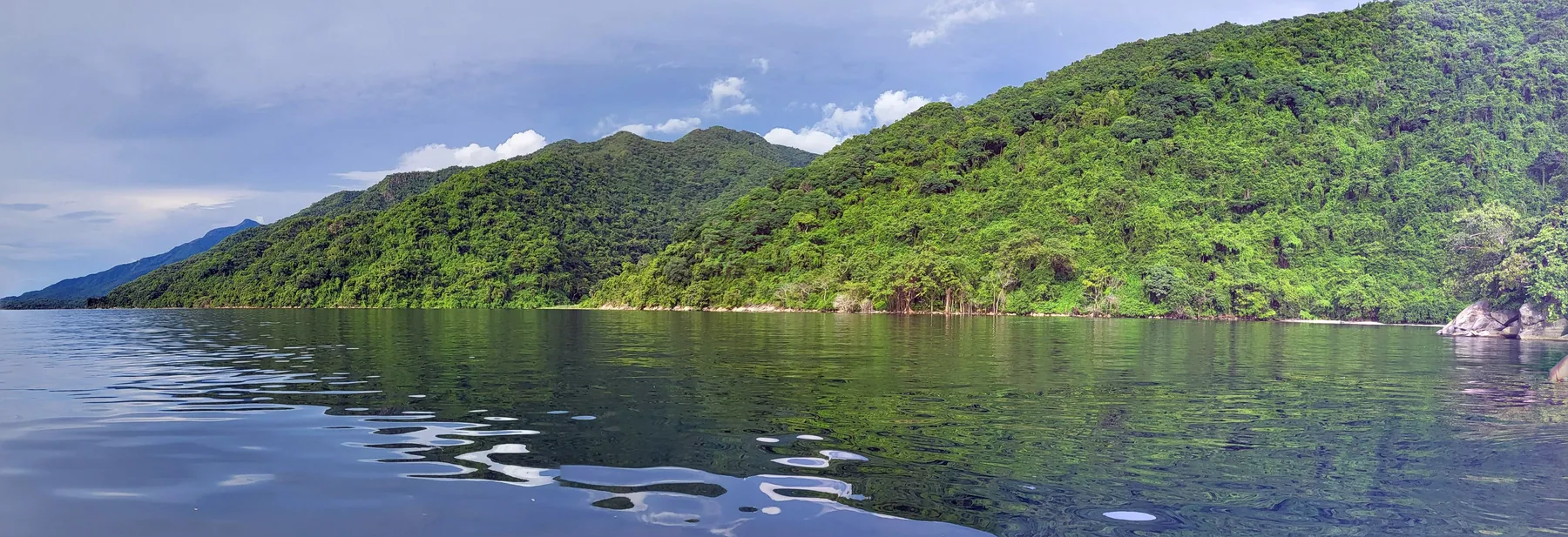
Lake Tanganyika lies along Tanzania's western frontier. Its narrow, deep basin, steep slopes and distinctive freshwater ecosystem make it feel unlike Lake Victoria. The lake supports fishing communities and ports, while forested mountains rise directly from parts of its shore.
Kigoma and Ujiji
Kigoma is an important town and port on the eastern shore. A visitor can approach it through its lakefront and markets, but also through the wider history of trade and movement across western Tanzania.
Nearby Ujiji is commonly remembered for the 1871 encounter between Henry Morton Stanley and David Livingstone. That episode belongs within a much larger account of regional settlement, African commerce, caravan networks and enslavement. Memorials are useful entry points, but the town's history did not begin with the arrival of European explorers.
Read about the coast–interior caravan networks.
Gombe
Gombe National Park, north of Kigoma, is internationally known through chimpanzee research associated with Jane Goodall. Its steep forest valleys, streams and lakeshore give a sense of how much of a chimpanzee encounter happens before the animals are found.
Travelling to Gombe commonly involves a boat journey from Kigoma and a ranger-guided trek. The research history is an additional reason to go, but it does not make an encounter with wild chimpanzees predictable.
Mahale
Farther south, Mahale Mountains National Park has a larger mountain-and-lakeshore setting. Forest walks in search of chimpanzees are the defining experience, while the lake and surrounding mountain scenery give the place its unusual character.
Gombe offers a famous research landscape; Mahale combines chimpanzees with a more remote mountain and lakeshore visit. Access and trekking demands differ.
Compare chimpanzee trekking in Mahale and Gombe.
Uvinza and the inland connection
Uvinza, away from the immediate lakeshore, is associated with salt production and inland exchange. Salt mattered in the economies that connected the Tanganyika region with trading centres farther east. It offers a useful way of understanding how places such as Ujiji and Tabora belonged to larger networks.
A visitor interested in this history should distinguish documented places from organised attractions: not every historic production site is open for public visits.
Katavi and Ugalla
The lakes are also gateways to landscapes that are not primarily lakeside destinations.
Katavi National Park is associated with seasonal floodplains and impressive concentrations of hippos, buffalo and other animals in suitable conditions. Its appeal is different from Gombe's forest research or Mahale's chimpanzees.
Ugalla River National Park offers riverine areas, wetlands and miombo woodland. It is particularly interesting as an alternative to the familiar open-plains safari, though access and visitor services deserve careful advance attention.
The region also connects to Tabora and Urambo, including the history of Chief Mirambo and the political life of nineteenth-century western Tanzania.
Compare Tanzania's wildlife destinations.
Lake Nyasa
Lake Nyasa, also called Lake Malawi, has a rich freshwater ecosystem, including diverse cichlid fishes. Its Tanzanian shores lie beneath high ground associated with the Livingstone Mountains, creating a striking meeting of lake and escarpment.
Fishing settlements, local agriculture, lake ecology and mountain scenery provide different reasons for exploring this southern region. Mtema Beach is among the places mentioned in earlier destination material, but the wider region is more interesting than a single beach name.
A lake visit might involve enjoying the shore, learning about fishing communities or looking into the surrounding mountains. Any swimming, boat trip or fishing activity should be based on local conditions and a suitable operator rather than assumptions drawn from another Tanzanian lake.
Compare the lake regions
| What draws you | Places to explore | What makes the choice distinctive |
|---|---|---|
| A large lakeside city and Sukuma culture | Mwanza and Bujora | Granite landscapes, urban life and museum interpretation |
| Island communities and agriculture | Ukerewe | A substantial inhabited island with its own towns and villages |
| An island protected area | Rubondo or Saanane | Forest, birds and wildlife under national-park rules |
| Chimpanzees and forest research | Gombe or Mahale | Different forest settings, access and wider experience |
| Western trade and political history | Kigoma, Ujiji, Uvinza, Tabora | Lake transport, salt, caravans and historic settlements |
| Seasonal remote wildlife | Katavi or Ugalla | Floodplains, river environments and woodland |
| Southern lakeshore and mountain landscapes | Lake Nyasa region | Freshwater ecology and the Livingstone Mountains |
Planning your visit
On a map, a town, an island and a national park can appear close together. That does not mean they share a transport service or the same entrance arrangements. For island or forest visits, establish the actual boat or ferry connection and the requirements of the destination.
For TANAPA-managed parks represented by KAONE, Browse fees and Calculate fees help with official charges. Trip scheduling explores supported protected-area visits; it does not arrange lake transport or accommodation.